Bar consultants can specify Kobayashi stations as part of a beverage program and join the industry partner tier, earning on the projects they spec. Stations are laid out around reach zones, ice capacity and throughput rather than around a catalog.
Most equipment is specified for an average bar. You are almost never hired for an average bar. You are hired because the peak looks nothing like the average, and that is exactly where standard equipment becomes the ceiling on what the room can serve.
Specified around service, not around a catalog
The layout was decided by someone who has worked the well and studied how bartenders move during a rush. Ice, bottles, rinse and waste sit inside one reach zone, so the same team gets through the same rush with less walking and less searching.
Ice, speed rail, rinse and waste inside one reach zone
Working surface at 38.78 inches so the well stays out of guest sight
Speed rail holds 11 to 12 bottles on the 65 and 88, 13 to 14 with BottleStep
Ice capacity quoted in servings, not just litres
Sized by bartender count at peak rather than by room size
Numbers you can put in a deck
Every model publishes ice capacity, realistic throughput, crew capacity and the guest count it is built for. A 135L well carries roughly 200 cocktails worth of ice through a shift and a 168L well roughly 300. You can build a service model on those figures and defend it to an owner.
When the build is already decided
Consultants are often brought in after the millwork is drawn. Standalone models drop into a room without structural work, so a service problem you find late can still be fixed without reopening the build. Drop-in models suit the cases where the counter is being built anyway.
Earning on the programs you build
Bar consultants sit in the industry partner tier alongside designers and architects. You earn on the projects you spec, the margin improves with multi-unit work, and project pricing is quoted per job. Terms are set when we place you in a tier, and applications are reviewed case by case.
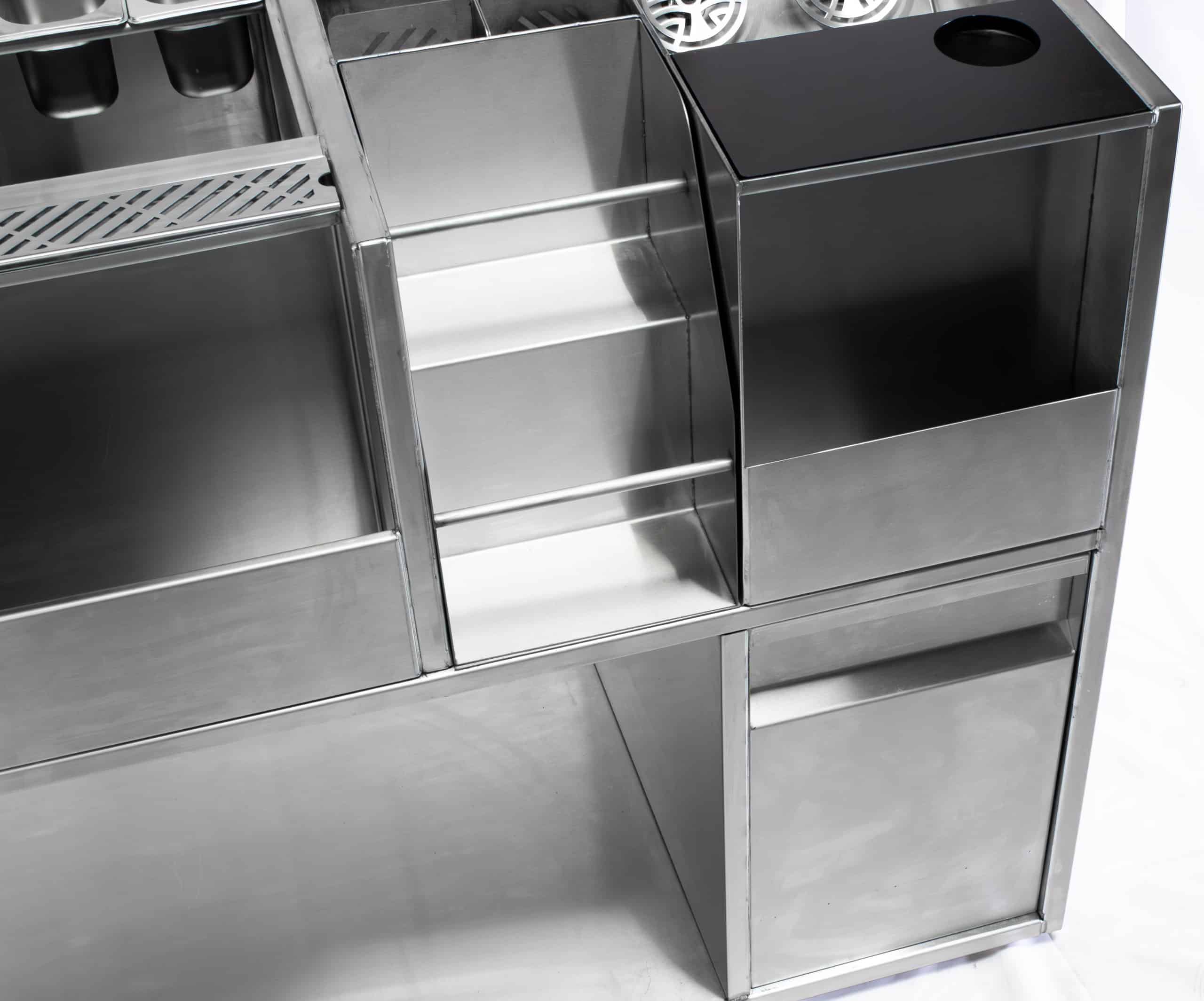
Everything For a Round, Without a Step
Nobody outruns a bad layout. With ice, bottles, rinse and waste inside one reach zone, the team gets through the rush with less walking, less searching and less strain. That is the part of a program that cannot be fixed with training.
- Less reaching, bending and twisting across a full shift
- Integrated bottle rail, no separate speed rail to buy
- Waste and rinse where the hand already is
Match a station to the service model
Answer a few questions about covers, crew at peak and install type, and the matcher will point at the model sized for it.
Related commercial bar equipment
Wholesale & Partner Program
Tiers, how the program works, and how to apply.
Bar Workflow Review
A structured study of how a bar needs to run.
Underbar Equipment
What sits under a working bar, with dimensions.
All Cocktail Stations
Compare five drop-in and standalone models.
Frequently asked questions
Yes. The partner tier exists so consultants who spec regularly earn on the work and get priority production, but anyone can order a station and every capacity figure you need is published.
By bartender count at peak and by ice, not by room size. The 52 inch models suit 80 to 120 guests with one to two bartenders, the 65 inch 120 to 170 with one to three, and the 88 inch 150 to 200 plus with two to four.
The 65 and 88 inch models carry a 168L ice chest, roughly 300 servings of ice through a shift, and are planned at 300 plus drinks per shift. The 52 inch models carry 135L, roughly 200 servings. Melt runs under 10 percent of capacity, so refills are driven by serving rather than by melt.
Yes. Every station includes a bar design consult, and there is a separate bar workflow review for projects where the operation needs studying before any equipment is chosen.
No. There is no flat minimum order quantity. Tier placement is based on how you specify or resell, and each application is reviewed individually.