Where to put a home bar
The four best home bar locations are the basement, a great-room corner, a kitchen extension, and a covered patio. Each balances plumbing access, entertaining flow, and space against how often you actually use it.
A home bar succeeds or fails on placement before a single bottle is poured. Put it where people already gather and where water and power are reachable, and it becomes the heart of the house. Tuck it somewhere awkward and it becomes a dusty shelf.
The classic. Room for a full wet bar, seating, and a TV. Plan a floor drain and a water line during any finish-out.
Keeps the host in the party. A freestanding stainless station needs no demolition.
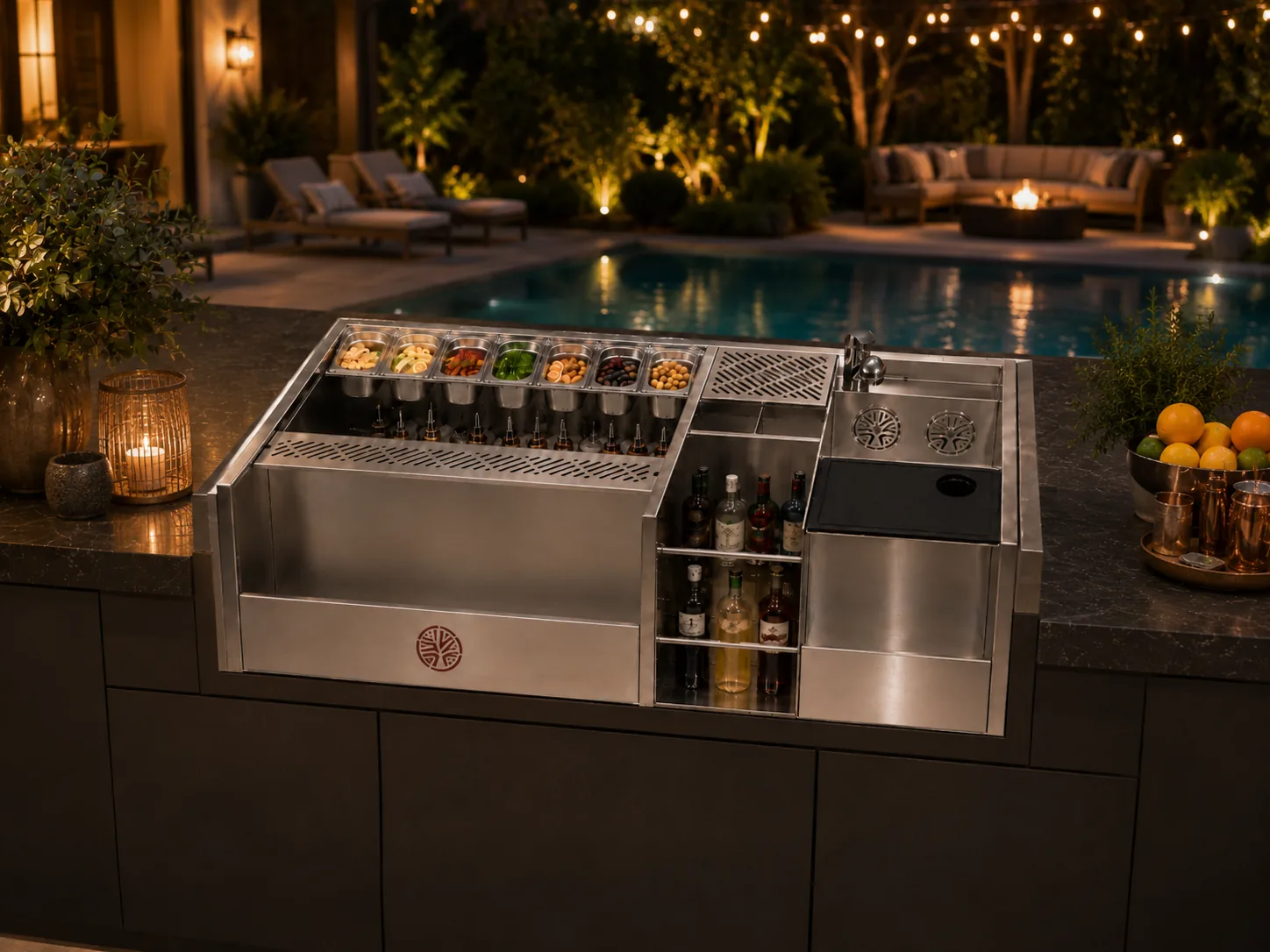
Borrows existing plumbing. A drop-in station integrates into a counter run.
Indoor-outdoor entertaining. Use weatherproof 304 stainless and see our outdoor portable bar.
Wet bar vs. dry bar
A wet bar has a sink and running water; a dry bar does not. A wet bar needs plumbing and a drain but handles real volume; a dry bar is simpler and cheaper but leans on an ice bucket and trips to the kitchen sink.
The honest middle path most home bars miss: a stainless station with an integrated ice well and glass rinser gives you wet-bar capability (cold ice on hand, a real rinse) without committing to full plumbing, because the optional water tank and pump run the rinser off a standard outlet.
For a home bar, the 52-inch is the sweet spot, full commercial hardware in a footprint that fits a basement or kitchen run. Drop-in to integrate into cabinetry, standalone or portable to keep it freestanding:
Home bar dimensions
Size a home bar around the station that goes in it. Every Kobayashi station is 24 inches deep and comes in 52, 65, or 88-inch lengths. The standalone models stand 39 inches tall, that height is your finished working surface, so you just roll it into place, while the drop-in models are a 16-inch well that sets into a 36 to 42-inch counter.
Plan the rest around those station numbers. Leave a 36-inch aisle behind the bar so one or two people can work without bumping. On the guest side, a 42-inch bar top suits counter-height stools, set it just in front of the standalone station's 39-inch surface, or run a drop-in into a 42-inch counter. Allow about 24 inches of bar length per seated guest: a 52-inch station seats two, a 65-inch about three, and an 88-inch four or more. Each station also carries a prep faucet that rises about 7.09 inches above the top, if you plan an upper cabinet, shelf, or overhanging bar top above the station, leave clearance for it.
What a home bar actually needs
A real ice well
Not an ice bucket. An integrated 135 L chest holds a full evening of ice without a kitchen run.
A glass rinser
One-second cold rinse between pours. The detail that separates a home bar from a shelf.
Speed rail / bottle storage
Most-poured bottles within reach so you are not turning for every drink.
Durable surface
304 stainless wipes clean and survives citrus, spills, and time. Wood and laminate do not.
Related guides & products
Man Cave Bar Design
Compact layouts, kegerators, and budget tiers.
Backyard Bar Design
Take the home bar outside.
Portable Home Bar (shop)
The freestanding stainless bar for homes.
Frequently asked questions
A home bar costs anywhere from $1,500 for a basic dry bar to $20,000-plus for a full custom wet bar with cabinetry. The commercial-grade stainless station at the center runs $5,590 to $9,250; it is the piece that makes the bar function like a professional one instead of looking like furniture.
For most homes the 52-inch station is ideal: it fits a basement nook or kitchen run, holds a 135 L ice well and glass rinser, and rolls through a standard doorway. Larger great rooms and frequent entertainers step up to the 65-inch.
If you want a wet bar with a sink, yes. You will need a water supply line and a drain, and we recommend hiring a licensed plumber to make those connections to local code. A dry bar with no sink does not need a water hookup. To get a working glass rinser without a permanent line, a freestanding Kobayashi station can run one from its integrated ice well plus an optional water tank and electric pump on a standard 110V outlet.
Choose a wet bar if you entertain often and have plumbing access; choose a dry bar for occasional use or to avoid plumbing work. A stainless station with an integrated ice well and pump-fed rinser gives most of the wet-bar experience without a permanent water line.
Plan the guest-side bar top at 42 inches for counter-height stools. Behind it, a Kobayashi standalone station gives you a 39-inch working surface, while the drop-in models are a 16-inch well that sets into a 36 to 42-inch counter. All stations are 24 inches deep, in 52, 65, and 88-inch lengths. Allow about 24 inches of bar length per seated guest and a 36-inch aisle behind the bar.