Used by Top Hotels, Restaurants and Bars Worldwide















The journey behind the bar stations trusted by top venues worldwide.
At Kobayashi, we see bartending as a practice of rhythm, awareness, and connection. Our stations are built to support that practice, not complicate it. Every design decision starts with the bartender's hands and ends with the guest's experience.
We believe that great equipment should disappear into the workflow. When a bartender reaches for a bottle, the bottle is there. When ice is needed, the well is positioned exactly where the hand naturally falls. When a glass needs rinsing, the rinser is one motion away. That is the standard we hold ourselves to.
This philosophy did not come from a boardroom. It came from years of standing behind the bar, watching what works, and questioning everything that does not.
The Kobayashi story begins long before the first station was ever built. It begins with a Wenzhounese family from southeastern China who made the decision to leave everything behind and start over in a new country.
Yu's parents immigrated with nothing but the willingness to work. Like many Wenzhounese families, they found their footing in the restaurant industry. They opened their first restaurant and poured everything into it. For over a decade, the family built a life through long hours, careful planning, and the kind of relentless discipline that defines immigrant entrepreneurship.
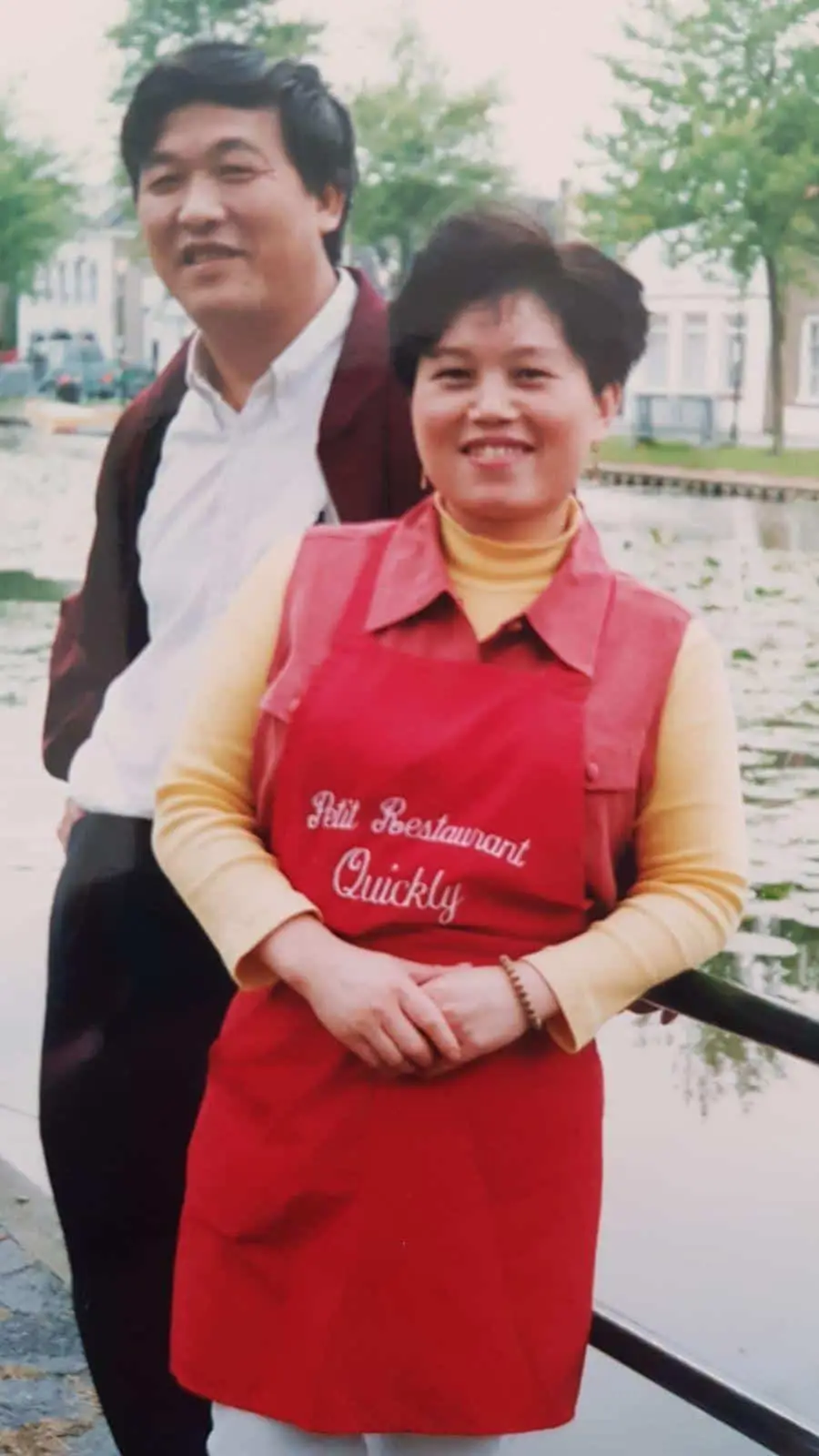
Those early years shaped everything that would come later. The understanding that quality matters. That consistency is earned through repetition. That serving people well is not just a business strategy but a way of life. These were the lessons passed down at the dinner table and behind the kitchen line.
After more than ten years of building their restaurant business, Yu's parents lost everything. The details of how it happened matter less than what came after. A decade of work, wiped clean. The family had to start over from nothing.
For most people, that kind of loss is the end of the story. For this family, it was a turning point. The same resilience that drove them to leave China and build something in a foreign country was the same resilience that kept them moving forward when the ground collapsed beneath them.
Starting over is not romantic. It is slow, uncertain, and humbling. But it taught the family something important: that the ability to rebuild is more valuable than anything you can lose.
Yu returned from Shanghai to help his family recover. He started working behind bars and in restaurants, taking any shift available. It was during these years that he began to see the industry from a different angle.
Every bar he worked at had the same problems. The ice wells were too shallow and poorly insulated. The speed rails were bolted on as afterthoughts. The glass rinsers were positioned in awkward spots that broke the natural flow of service. Bartenders were fighting their equipment every single shift.
The worst part was that everyone accepted it. This was just how bars were set up. You adapted to the limitations of the equipment, not the other way around. But Yu could not stop noticing the inefficiencies. Every wasted step was time. Every awkward reach was fatigue. Every poorly designed station was money left on the table.
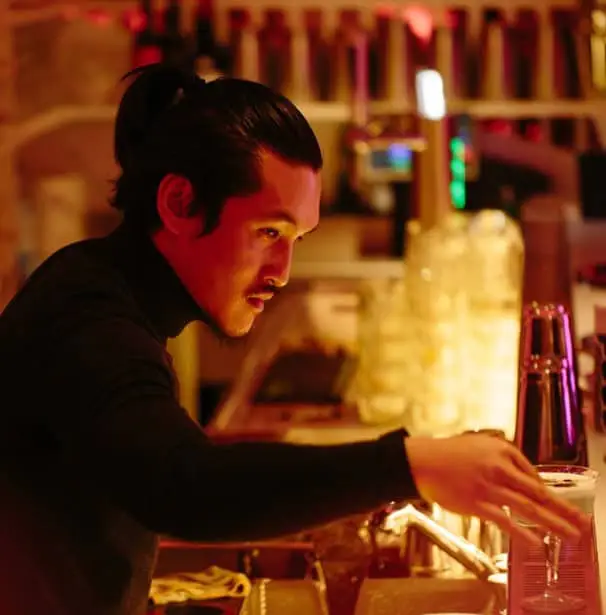
The brothers began rebuilding together. While working to stabilize the family, Yu spent every spare moment studying bar workflow. He observed bartenders at dozens of venues, timing their movements, mapping their reach patterns, documenting the bottlenecks that slowed service.
He tested materials. He studied the properties of different stainless steel grades and insulation types. He spoke with fabricators, welders, and engineers. He read everything he could find about commercial kitchen design and ergonomics.
Most importantly, he kept bartending. The research was not theoretical. It was lived. Every shift behind the bar was a testing ground for new ideas. Every busy Friday night revealed another flaw in the conventional setup that needed solving.
This phase lasted years. There were no investors, no business plan, no timeline. Just a relentless commitment to understanding the problem before attempting to solve it.
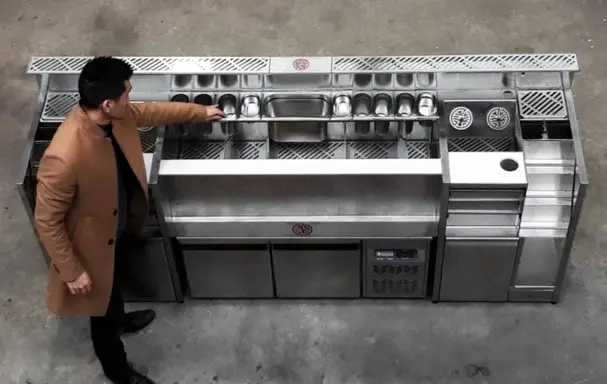
The transition from bartending to bar equipment design happened gradually. Yu did not wake up one morning and decide to start a company. The idea emerged from thousands of hours of observation and a growing frustration with the gap between what bartenders needed and what was available.
Existing bar equipment was designed by people who manufactured metal, not by people who poured drinks. The industry prioritized what was easy to fabricate, not what made bartenders faster. Yu saw an opportunity to approach the problem from the other direction: start with how a bartender actually moves, then engineer the station around that movement.
Every component had to earn its place. If it did not improve the bartender's workflow, it did not belong in the design.
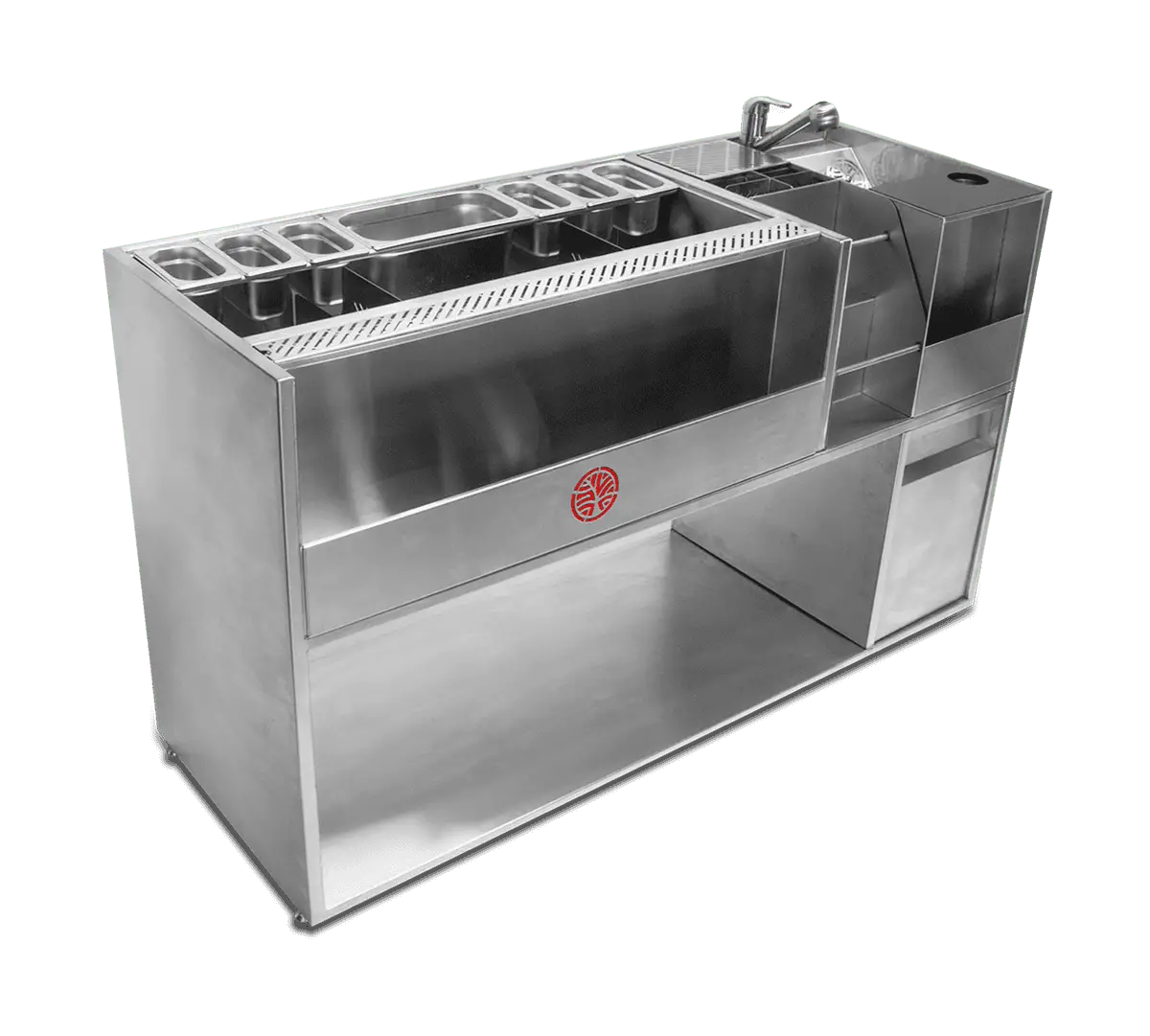
The first Kobayashi prototype was not pretty. It was rough, overbuilt, and heavier than it needed to be. But it worked. More importantly, it proved that the concept was sound.
Yu tested the prototype in real bar environments. He watched bartenders use it during actual service. He measured the difference in speed, in steps taken, in how quickly drinks moved from station to guest. The results confirmed what he had suspected: a purpose-built station designed around natural bartender movement was measurably faster than a conventional setup.
The prototype went through dozens of revisions. Each iteration refined a detail. The angle of the speed rail. The depth of the ice chest. The position of the glass rinser. Nothing was arbitrary. Everything was tested.
Word spread the way it always does in the bar industry: bartender to bartender. Someone would use the station during a guest shift and ask where it came from. A bar owner would visit a venue that had one and want to know more. A consultant would recommend it to a client.
The first orders came from people who understood what they were looking at. They were bar owners and operators who had experienced the same frustrations Yu had and recognized that someone had finally solved the problem properly.
There was no marketing budget. No trade show booth. No advertising campaign. The product sold itself because it solved a real problem that every working bartender understood. That early traction proved that the market existed and that it was ready for a better solution.
Moving from prototype to production required solving an entirely different set of problems. Building one station by hand is a craft project. Building them consistently, at scale, with the same level of quality, is a manufacturing challenge.
The team refined every step of the fabrication process. They developed jigs and fixtures to ensure consistency. They established quality control checkpoints at each stage of assembly. They tested insulation methods, welding techniques, and finishing processes until every station that left the shop met the same standard.
Growth was intentional, not reckless. Each new order was an opportunity to improve the process. Each customer interaction revealed something that could be made better. The goal was never to produce the most stations. It was to produce the best stations.
Every founder reaches a point where the business needs skills beyond their own. For Yu, that moment came when the demand began outpacing what one person could manage. The product was proven. The market was responding. But scaling required complementary expertise.
The right partnership brought structure to the vision. Business operations, supply chain management, and strategic planning paired with product knowledge, bar industry relationships, and design intuition. The combination accelerated growth without compromising the core values that made Kobayashi different.
Together, they formalized the consulting process that now comes with every station. The one-hour design session ensures that every client gets a station configured for their specific space, service style, and volume requirements.
Kobayashi's early traction came from European venues. The craft cocktail movement in cities like Rotterdam, Amsterdam, and London created demand for equipment that matched the ambition of the bartenders using it. These were operators who cared deeply about workflow and were willing to invest in tools that made their teams faster and more consistent.
Expanding to the United States required adapting to a different market. American bars operate at different volumes, with different plumbing standards, different freight logistics, and different expectations around lead times and customer service. Each of these challenges was addressed methodically.
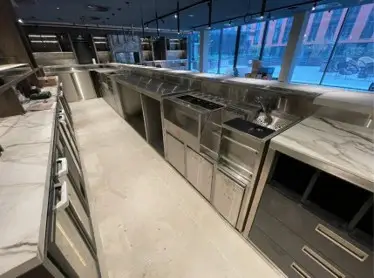
Today, Kobayashi stations are used in venues across both continents. The diversity of installations, from intimate cocktail bars to high-volume hotel operations, has made the product better. Every new environment reveals an edge case that strengthens the design.
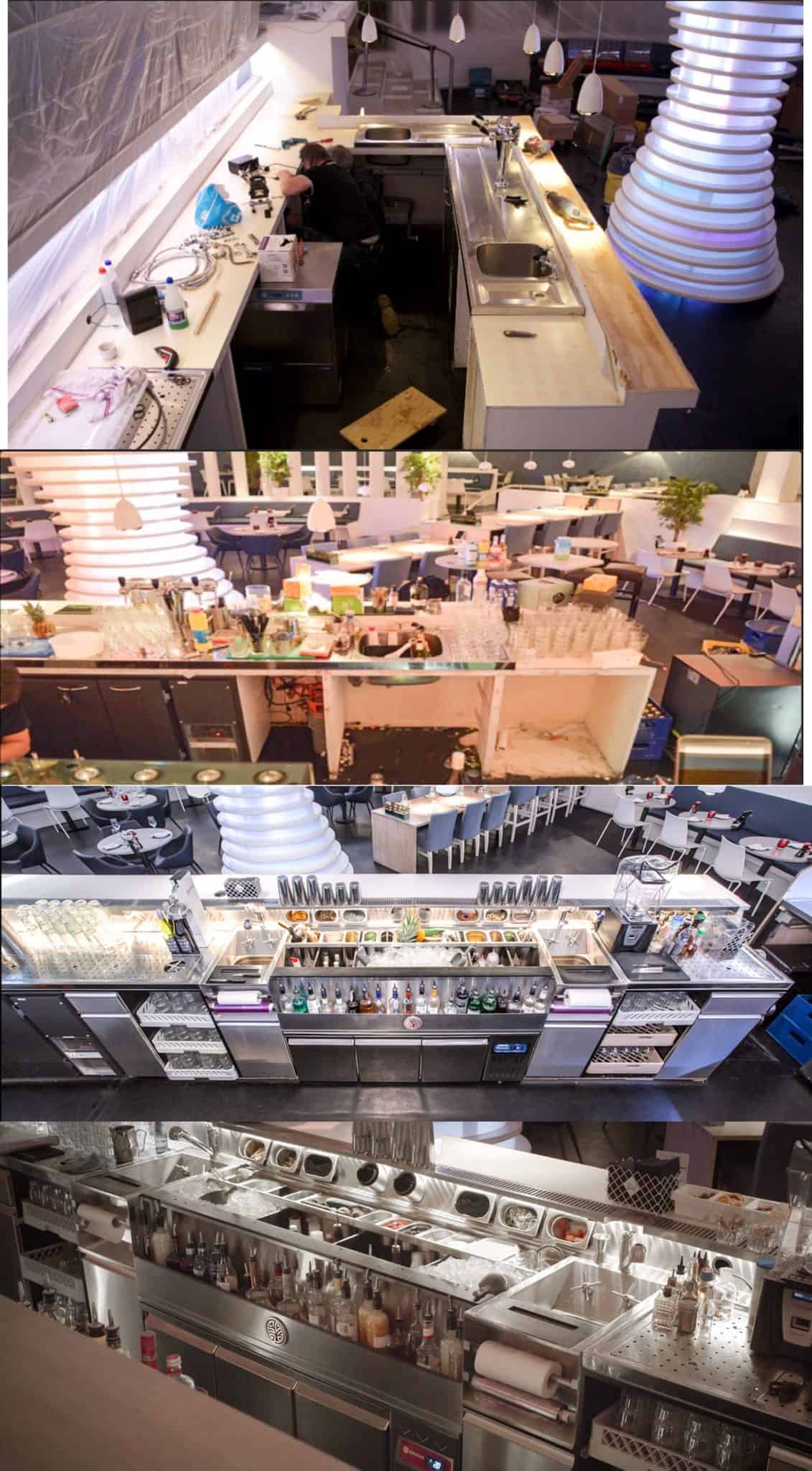
Manufacturing in America was a deliberate choice. It means shorter lead times for domestic orders, direct oversight of quality control, and the ability to respond quickly when a client needs a custom modification.
Every Kobayashi station is fabricated from 304 stainless steel by skilled welders and metalworkers. The ice chests are insulated with 3/4-inch closed-cell foam. Every drain, glass rinser, and speed rail is pre-installed before the station ships. When it arrives on your loading dock, it is ready to install.
The lifetime guarantee is not a marketing claim. It is a reflection of confidence in the materials and craftsmanship that go into every unit. If a structural component fails due to workmanship, we repair or replace it. That commitment only works when you control the manufacturing process.
The Kobayashi name and the maze in our logo are not decorative. They represent the journey itself.
Entrepreneurship is a maze. You enter without a map. Every dead end teaches you something. Every wrong turn narrows the possibilities until the path forward becomes clear. The maze is not the obstacle. The maze is the process.
For Yu and his family, the maze was immigration, loss, rebuilding, years of research, failed prototypes, and the slow accumulation of knowledge that eventually became a company. The path was never straight. It was never supposed to be.
The maze in our logo is a reminder that complexity, when navigated with patience and intention, leads to simplicity. And simplicity is what we build into every station. A bartender steps up to a Kobayashi and everything is where it should be. That clarity is the result of years spent inside the maze.
That is our story. It is still being written.
Every station includes a 1-hour bar design consulting session. We will help you spec the right model for your space and service style.