Sizing a wedding bar to guest count
Size a wedding bar by guest count and bartender stations: plan one bartender per 50 to 75 guests, and one bar station per one to two bartenders. A 100-guest wedding runs one well with two bartenders; 150-plus guests need a second bar or a double-length station to clear cocktail hour.
Cocktail hour is the whole game in wedding bar design. Dinner and dancing spread drink orders out, but cocktail hour compresses the entire guest list into one 45-minute surge. Size the bar for that surge, not the average, or the line becomes the thing guests remember.
The math is simple: one bartender clears 50 to 75 guests comfortably, and each needs a build position with ice, a rail, and a rinser. Two bartenders on a 65 or 88-inch station, or two separate bars for a big tent, keep the line under a few minutes.
One station, two bartenders. A 65-inch with 168 L of ice clears cocktail hour without a runner.
A double-length 88-inch station or two 52/65-inch bars to split the line in two.
Multiple bars positioned around the space so no guest crosses the whole room for a drink.
A separate station for batched signature cocktails keeps the main bars free for beer, wine, and pours.
Self-contained bars for any venue
Most wedding venues, tents, barns, vineyards, rooftops, backyards, have no bar plumbing. A self-contained portable bar solves it: an integrated ice well plus an optional water tank and 110V pump run a glass rinser anywhere, so the bar sets up on grass or a ballroom floor alike.
The defining constraint of wedding bars is that they happen wherever the couple wants, which is rarely somewhere with a plumbed bar. A self-contained 304 stainless portable bar turns any venue into a working bar: it arrives on castors, runs the cold side and rinser from onboard supply, and rolls out when the night ends, no trenching, no rental-table compromise.
Wedding bars run on self-contained portable stations that set up anywhere and photograph well. The 52 and 65-inch portable bars carry their own castors and water tank; add a guest-side drink rail for larger receptions:
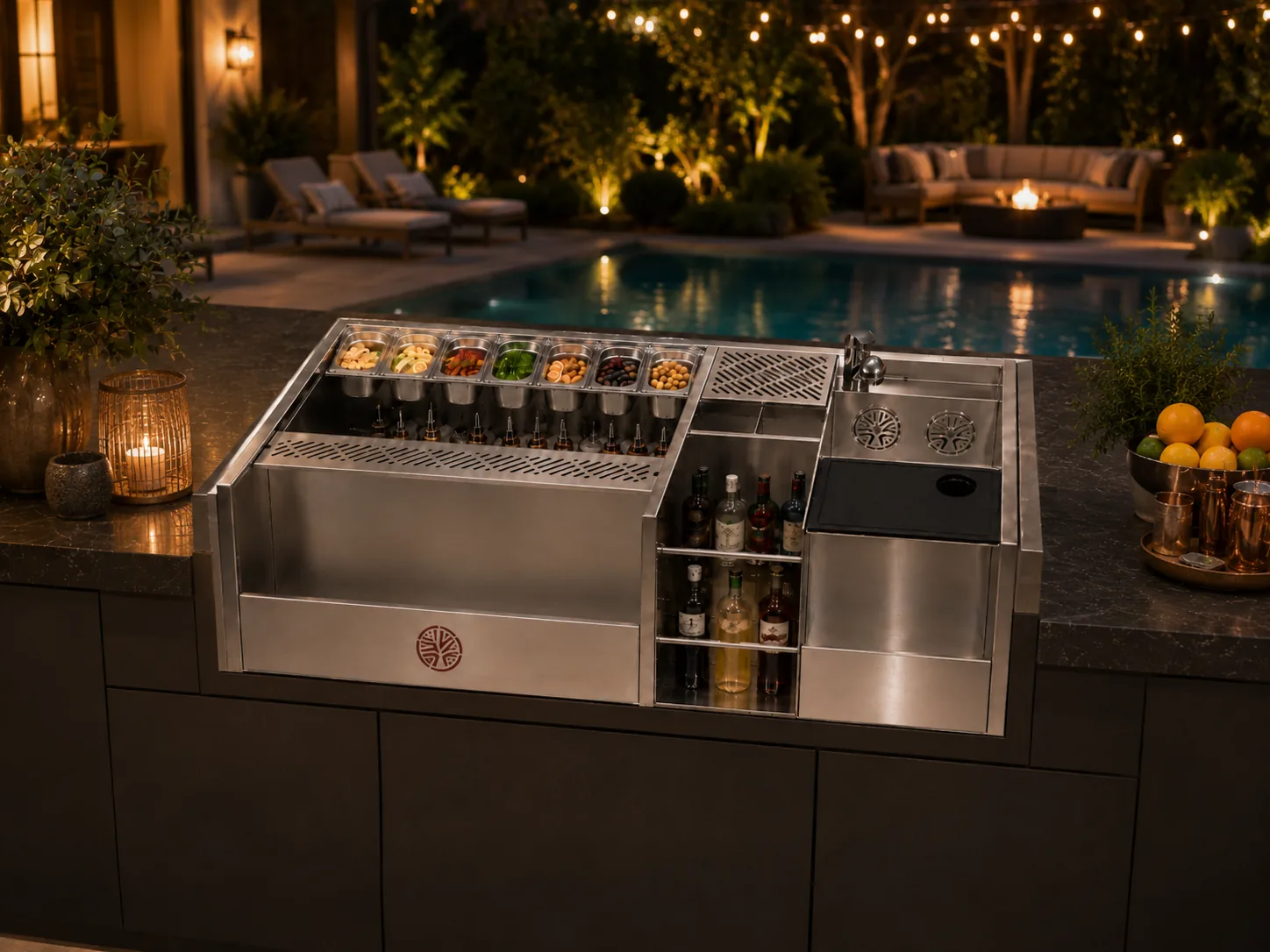
Bar placement and flow at a reception
Place wedding bars away from the entrance and dance floor but visible from the guest tables, with enough open space in front for a queue that won't block traffic. For larger receptions, two bars on opposite sides of the room halve the walk and the wait.
Where the bar sits shapes the whole room's flow. Put it too close to the entrance and the cocktail-hour line jams the doorway; put it on the dance floor's edge and the queue collides with dancing. Set bars where guests can see them from their tables, leave a clear apron in front for the line, and for big rooms split the service into two bars so no one crosses the entire floor for a drink.
Wedding bar planning checklist
Size for cocktail hour
Plan one bartender per 50 to 75 guests and enough stations to clear the 45-minute surge, not the average.
Confirm the venue's utilities
Assume no plumbing, a self-contained portable bar runs the rinser from an onboard tank and 110V outlet.
A full event of ice
An insulated 135 to 168 L ice well holds the reception without a mid-event ice run.
A signature-drink station
Batch the couple's signature cocktail at its own station to keep the main bars moving.
A bar that photographs
Clean 304 stainless anchors a styled bar front, it looks the part in every reception photo.
Related guides & products
Portable Bar for Events
Sizing and running an event bar.
Mobile Bar Design
The self-contained mobile bar build guide.
Commercial Portable Bar (shop)
The self-contained stainless bar, in all sizes.
Frequently asked questions
Plan one bartender per 50 to 75 guests and one bar station per one to two bartenders. A 100-guest wedding runs one station with two bartenders; 150-plus guests need a second bar or a double-length station to clear cocktail hour. For big tents, split service into two bars on opposite sides so no guest crosses the whole room.
Size a wedding bar for cocktail hour, the peak when the entire guest list orders in 45 minutes, not the dinner-and-dancing average. Plan one bartender per 50 to 75 guests, each with a build position (ice, rail, rinser). Two bartenders on a 65 or 88-inch station clear up to about 175 guests; beyond that, add a second bar.
Usually not. Tents, barns, vineyards, rooftops, and backyards rarely have a plumbed bar. A self-contained 304 stainless portable bar handles it: an integrated ice well plus an optional water tank and 110V electric pump run a glass rinser anywhere, with a waste tank for runoff, so the bar works on grass or a ballroom floor alike.
A self-contained 304 stainless portable bar is the best choice for a wedding: it sets up at any venue without plumbing, holds a full event of ice, runs a real glass rinser, rolls in and out on castors, and photographs cleanly enough to anchor a styled bar front. It outperforms rental folding-table bars on both speed and looks.
Renting bar setups for a wedding can run several hundred dollars per bar per event, which adds up fast for planners and venues that host often. A Kobayashi 304 stainless portable bar starts at $5,950, needs no plumbing, serves event after event, and doubles as a backyard or home bar between weddings.