What makes a bar mobile
A mobile bar is a self-contained, freestanding bar on castors that runs without a permanent water or drain line. The design problem is supplying ice, water, and waste handling on board, an integrated ice well plus an optional water tank and 110V pump replace the plumbing a fixed bar relies on.
The whole challenge of mobile bar design is the utilities you don't have. A fixed bar takes water, drainage, and power for granted. A mobile bar arrives at a backyard, a rooftop, or a ballroom with none of them guaranteed and still has to rinse glassware and keep a full service of ice cold.
The answer is a station that carries its own supply: an insulated ice well for the cold side, a water tank and electric pump for the rinser, and a waste tank for the runoff, all on a frame that rolls on castors and sets up in minutes.
An onboard water tank and 110V electric pump feed a working glass rinser with no permanent line to connect.
An insulated 135 to 168 L ice well holds a full event; a waste tank captures rinse runoff for self-contained service.
Castors and a freestanding frame mean the bar rolls off a truck and into service in minutes, then rolls back out.
Outdoor events mean sun, rain, and humidity, stainless ignores all three where coated steel and wood fail.
Starting a mobile bar business
A mobile bar business is built on a bar that travels well: light enough to load, tough enough to survive constant transport, self-contained enough to serve anywhere, and presentable enough to anchor a wedding or a corporate event. A 304 stainless portable bar checks all four.
For a mobile bartending or events company, the bar is the product and the overhead. It gets loaded, unloaded, rolled across grass and ballroom floor, and set up by a small crew every weekend, so it has to be durable and fast above all. A self-contained 304 stainless portable bar runs at any venue without waiting on the site's plumbing, and it photographs well enough to headline an event without dressing.
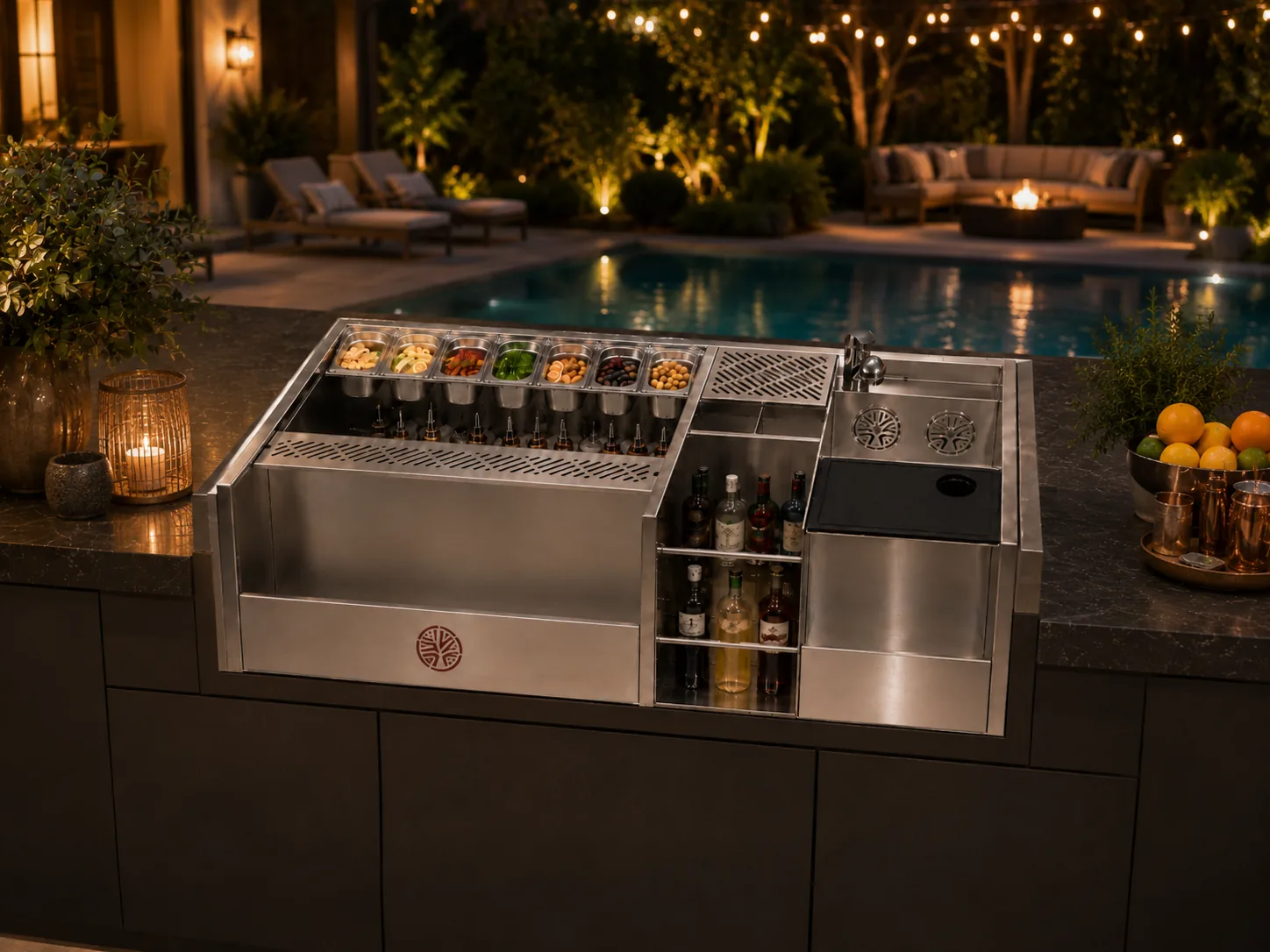
A mobile bar runs on a self-contained portable station, the cold side and rinser travel with it. The 52 and 65-inch portable bars carry their own castors and water tank; add a guest-side drink rail for bigger events:
Mobile bar dimensions and transport
A mobile bar should roll through a standard 36-inch doorway, load into a van or box truck, and set up freestanding without tools. Kobayashi portable and standalone stations are 24 inches deep in 52, 65, and 88-inch lengths and stand 39 inches tall, the working surface height, ready on arrival.
Think about every door, ramp, and truck the bar has to pass through before the event. A 52 or 65-inch station rolls through a standard doorway and loads into most cargo vans; the 88-inch needs a box truck and a clear path. The 39-inch standalone height means the bar arrives at full working height, roll it into place and start pouring. The prep faucet rises about 7.09 inches above the top, so account for it when stacking or covering for transport.
Mobile bar event checklist
Self-contained water & pump
An onboard tank and 110V pump run the rinser at venues with no water line.
A full event of ice
An insulated 135 to 168 L ice well holds the service without a mid-event ice run.
Waste handling
A waste tank captures rinse runoff so the bar serves cleanly anywhere, indoors or out.
Castors and a clear path
Confirm doorways, ramps, and the truck before the event, the bar should roll the whole route.
Weatherproof finish
304 stainless survives sun and rain, so an outdoor event is never a gamble on the equipment.
Related guides & products
Commercial Portable Bar (shop)
The self-contained stainless bar, in all sizes.
Portable Bar for Events
Sizing a bar for weddings, parties, and corporate events.
Wedding Bar Design
Designing the reception bar a mobile setup serves.
Frequently asked questions
Design a mobile bar to run self-contained: a freestanding 304 stainless station on castors with an integrated ice well, an onboard water tank and 110V electric pump for the rinser, and a waste tank for runoff, so it serves at any venue without a permanent water or drain line. Size it to roll through a 36-inch doorway and load into your vehicle.
No. A mobile bar is designed to run without permanent plumbing. A Kobayashi portable station's integrated ice well plus an optional water tank and electric pump feed a working glass rinser on a standard 110V outlet, and a waste tank captures the runoff. For a venue that does offer a water line, it can connect to that instead.
A mobile bar business needs a durable, self-contained, presentable bar that travels well; a vehicle to transport it; the bar tools, glassware, and ice supply for service; and the licensing and insurance your area requires. The bar itself is the core asset, a 304 stainless portable station serves at any venue and survives constant transport.
A 52 or 65-inch portable station is the mobile-bar sweet spot: it rolls through a standard 36-inch doorway, loads into a cargo van, holds 135 to 168 L of ice, and serves a typical event from one bartender. Larger events or two-bartender service step up to the 88-inch, which needs a box truck.
A mobile bar from Kobayashi starts at $5,950 for a self-contained 304 stainless portable station that needs no construction and runs from an onboard water tank. A full mobile-bar business setup adds transport, glassware, tools, licensing, and insurance on top of the bar.