Residential vs. restaurant patio bars
Patio bars split into two cases: a residential patio bar (compact, occasional, often portable) and a restaurant patio bar (a seasonal revenue extension that has to move real volume). Both need weatherproof materials and a tight footprint.
The restaurant patio bar is one of the highest-ROI bar additions in hospitality, it turns a few outdoor tables into a full-margin service zone for the warm months. The residential version is about entertaining without running back to the kitchen. A portable 304 stainless bar serves both.
Compact, often a 52-inch portable. Rolls out for guests, stores when not in use.
Seasonal revenue extension. A 65-inch portable or standalone serves a full patio section.
Covered patios allow more finish options; open patios demand all-stainless hardware.
Patios are tight, a freestanding bar avoids built-in cabinetry eating seating space.
Patios reward a compact, weatherproof, freestanding bar. The 52-inch portable is the patio favorite; size up for restaurant patio sections:
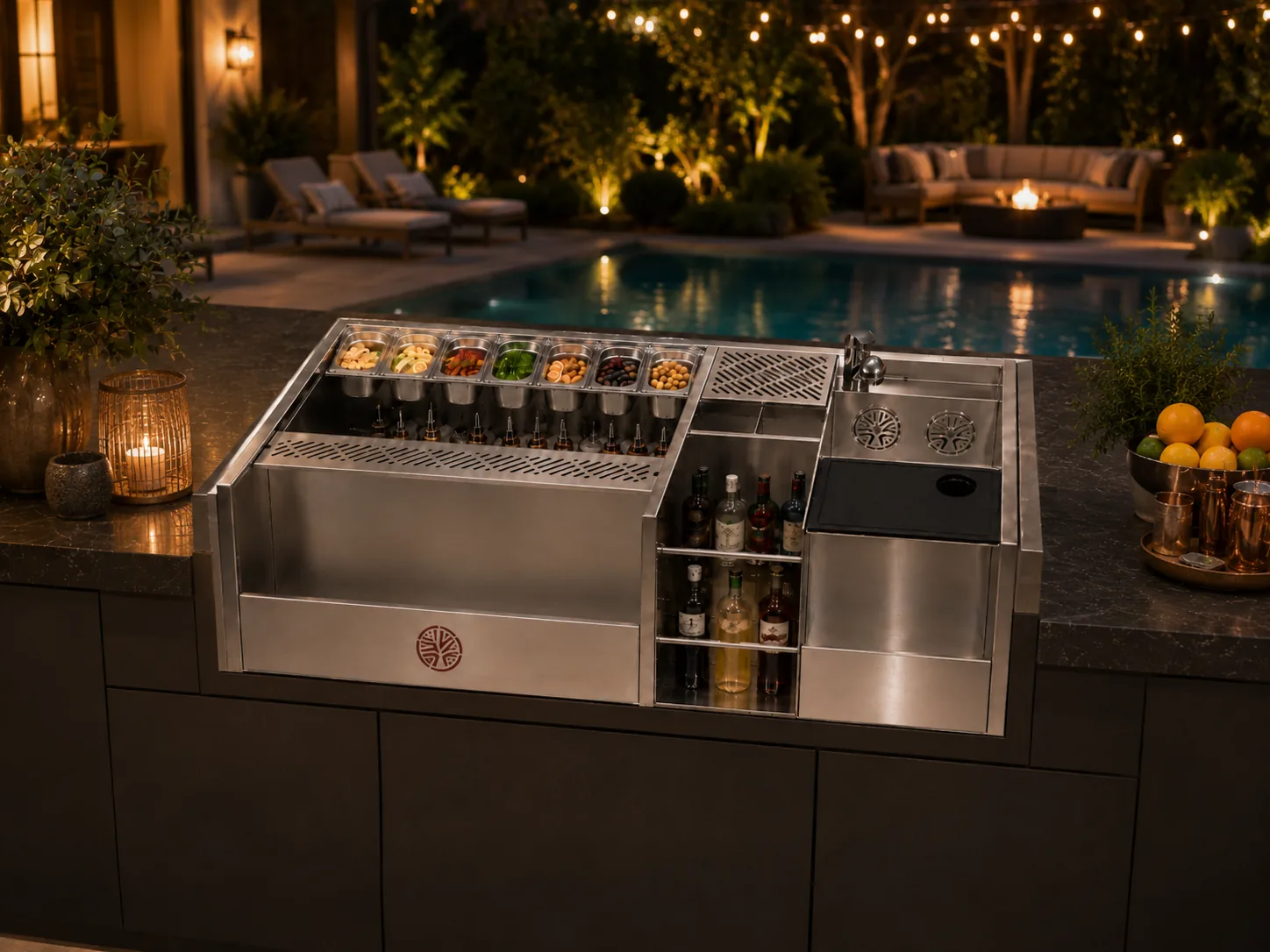
Patio bar materials that last
Use 304 stainless steel for any patio bar's working surfaces. On an open patio exposed to rain and sun, it is the only material that holds up season after season without rusting, pitting, or fading, the same reason it is standard in outdoor commercial kitchens.
Patios are unforgiving: full sun, blowing rain, and on coastal or poolside patios, salt and chlorine in the air. Finishes that survive an indoor bar fail fast here. Build the working bar from 304 stainless and let the surrounding hardscape and furniture carry the style.
Compact patio bar layout tips
Keep the footprint freestanding
A portable bar avoids built-in cabinetry that eats limited patio seating.
Plan one 110V outlet
Runs the rinser pump from a self-contained water tank; no trench across the patio.
Position for shade and flow
Out of the harshest sun, with a clear path from the kitchen or house.
Store in the off-season
A freestanding bar rolls indoors, no patio bar left to weather the winter.
Related guides & products
Outdoor Portable Bar (shop)
Weatherproof stainless built to roll outside.
Backyard Bar Design
The full backyard bar build guide.
Commercial Portable Bar
All sizes and configurations.
Frequently asked questions
304 stainless steel is the usual choice for a patio bar exposed to sun and rain. It outlasts coated steel, aluminum and sealed wood, which degrade within a season. It is not corrosion proof: chlorides from pool chemicals and salt air can pit 304, so near a pool or the coast evaluate 316 with the fabricator. Let the surrounding hardscape and furniture carry the style while the working bar stays stainless.
Most residential patio bars work best as a compact 52-inch portable that rolls out and stores away. Restaurant patios serving a full outdoor section step up to a 65-inch. Keep it freestanding so built-in cabinetry does not eat limited patio seating.
A permanent patio bar with a sink needs a water supply and a drain, so we recommend hiring a licensed plumber to run them (plus a shut-off for winter). A freestanding portable bar needs only a standard 110V outlet: its integrated ice well plus an optional water tank and pump run a glass rinser with no trench to cut across the patio.
Yes. A restaurant patio bar turns seasonal outdoor seating into a full-margin service zone and is one of the highest-ROI bar additions in hospitality. A portable 304 stainless bar lets you add or remove the patio bar by season without permanent construction.
Roll a freestanding portable bar indoors. A 304 stainless station stores in a garage or shed; the only step is draining the optional water tank. There is no exposed built-in to cover or winterize.