Garage vs. basement man cave bars
The two man-cave homes are the garage (epoxy floor, roll-up door, no climate control) and the basement (finished, climate-controlled, plumbing nearby). The garage favors a rugged freestanding bar; the basement allows a built-in wet bar.
A garage bar has to take temperature swings and the occasional hose-down, which is exactly where a freestanding 304 stainless bar shines, it rolls out for the party and ignores the conditions. A basement gives you the option of a built-in with run plumbing if you want a permanent setup.
Rugged, freestanding, hose-down-friendly. A portable stainless bar rolls out and back.
Finished and climate-controlled. Allows a built-in wet bar with run plumbing.
A standalone station + a countertop kegerator. Real bar, modest spend.
A built-in counter, drop-in station, and a dedicated draft system.
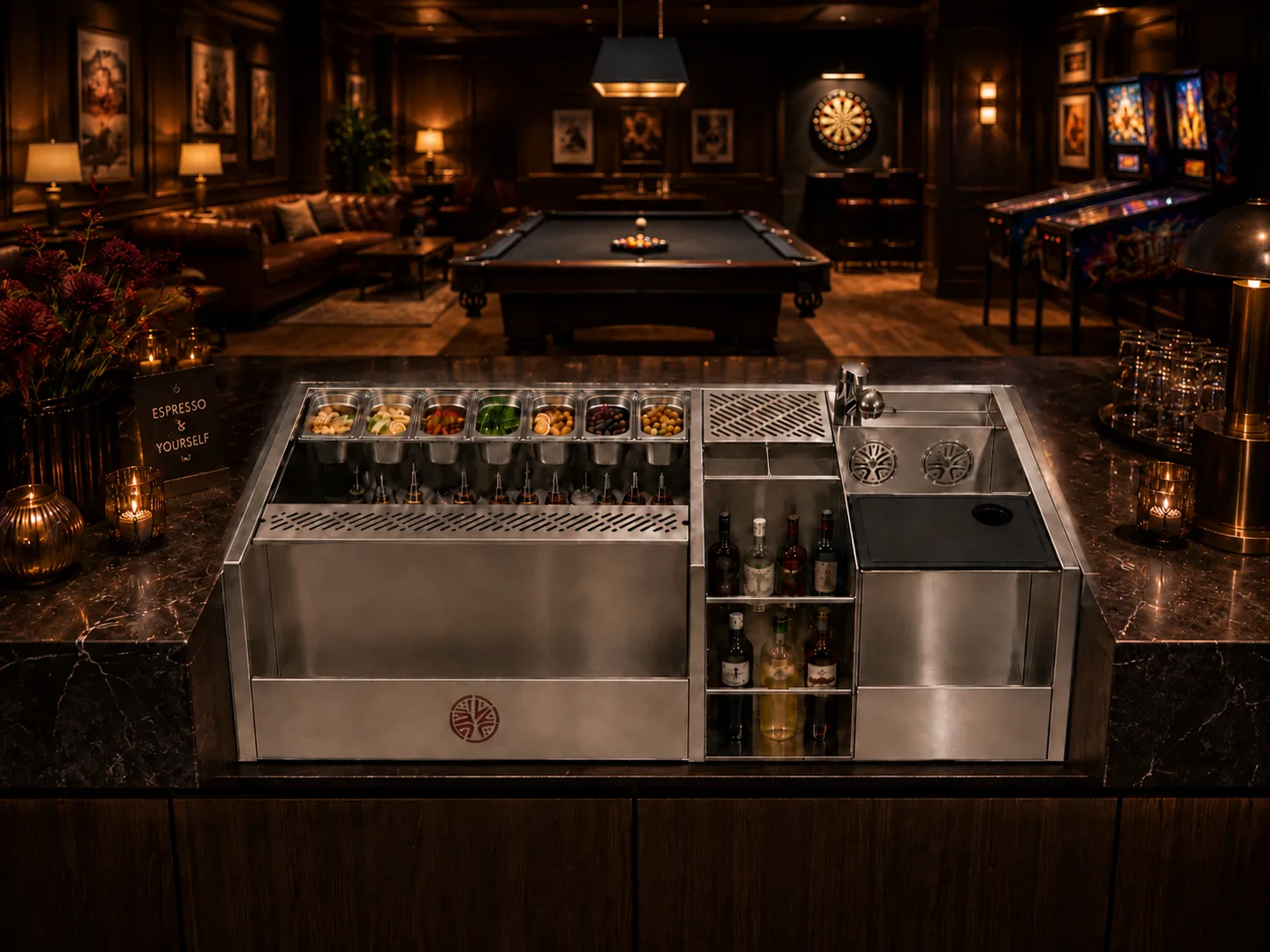
A man cave rewards a tough, compact station. The 52-inch is the pick, standalone for a garage that needs to roll, drop-in for a finished basement build:
Adding a kegerator or tap system
A kegerator is the man-cave upgrade that pays off: cold draft on tap beats bottles for game day. Pair a countertop or under-counter kegerator with the station for ice and rinse, or run a small glycol line for a permanent tap wall in a finished basement.
Keep the draft simple in a garage: a self-contained kegerator next to the station covers most setups. In a finished basement going permanent, a short direct-draw or glycol line to a tap on the bar top turns the man cave into a proper taphouse corner.
Related guides & products
Game Room Bar Design
Designing the bar around pool tables and screens.
Home Bar Design
The full home bar layout guide.
Portable Home Bar (shop)
The freestanding stainless bar for homes.
Frequently asked questions
A man cave bar ranges from about $2,000 for a standalone station plus a countertop kegerator to $15,000-plus for a finished basement build with a built-in counter, drop-in station, and draft system. The commercial stainless station at the center runs $5,590 to $7,500.
A 52-inch station is the man-cave pick: it fits a garage corner or basement wall, holds a 135 L ice well and speed rail, and rolls through a standard doorway. Standalone for a garage that needs to move, drop-in for a finished basement.
Yes, and a freestanding 304 stainless bar is ideal for it. Stainless takes garage temperature swings and the occasional hose-down without damage, and the bar rolls out for the party and back against the wall afterward. For a permanent sink, run a water line and drain with a licensed plumber; for a simple rinser, the optional water tank and pump work off a standard outlet.
Not required, but a kegerator is the upgrade most worth it for game day, cold draft on tap beats bottles. Pair a self-contained kegerator with a station for ice and rinse, or run a glycol line to a permanent tap in a finished basement.
For a built-in wet bar, yes. A water supply and a drain are required, and we recommend hiring a licensed plumber to connect them to code. For a garage or basement where adding a drain is costly, a freestanding Kobayashi station can run a glass rinser from its integrated ice well plus an optional water tank and electric pump on a standard 110V outlet instead.